For decades, private equity firms have run multi-billion dollar portfolios on a tool that was never built for the job: the spreadsheet. While it's a familiar interface, this approach often creates more problems than it solves. It turns the critical task of portfolio monitoring into a high-stakes, manual slog.
It’s like trying to navigate a high-speed race with a hand-drawn map. It might get you there eventually, but it's dangerously imprecise and painfully slow to update.
The Shift From Spreadsheets to Strategic Software
Picture the end of a quarter. Your team is buried under a mountain of Excel files, one for each portfolio company. They’re burning the midnight oil, manually punching in data, hunting down formula errors, and wrestling to consolidate everything into one coherent report for your Limited Partners (LPs).
By the time that report is finally done, the data is already weeks old. The insights are stale.
This manual grind isn't just inefficient; it's a huge strategic handicap. It’s riddled with risks that are almost impossible to avoid:
- Data Silos: Information gets trapped in separate files and inboxes, making a single, unified view of the portfolio a complete fantasy.
- Human Error: One broken formula or a simple copy-paste mistake can throw off an entire valuation model, leading to decisions based on bad data.
- Delayed Insights: When you're always looking at historical data, you're constantly reacting to what's already happened instead of proactively spotting what’s coming next.

A New Standard for Portfolio Oversight
The market's demand for better transparency and quicker decisions has made the old way of doing things obsolete. This isn't just about getting new tech; it's a fundamental shift in how successful PE firms operate. The move to private equity portfolio monitoring software is all about trading static, rearview-mirror analysis for a dynamic, forward-looking strategy.
This shift empowers firms to replace guesswork and administrative drag with data-driven confidence. It transforms portfolio monitoring from a burdensome reporting exercise into a continuous source of strategic advantage and value creation.
Making this change is absolutely essential for keeping a competitive edge. Our guide digs deep into how firms are moving beyond spreadsheets and using advanced platforms for truly superior portfolio oversight.
Why the Change Is Happening Now
Let's be honest, today's investment world is just too complex and fast for manual methods. LPs demand institutional-grade reporting, and General Partners (GPs) need live data to make smart calls on where to put capital.
Dedicated software solves this by automating data collection, standardizing how you calculate valuations, and giving you instant access to the KPIs that actually matter. For anyone still caught in the manual reporting trap, understanding the move from https://vestberry.com/reporting-excel to a dedicated platform makes the benefits crystal clear.
Ultimately, adopting specialized software isn't a luxury anymore. It's a necessity for any firm serious about maximizing returns, managing risk, and building unshakable trust with its investors.
What Exactly Is Portfolio Monitoring Software?
At its heart, private equity portfolio monitoring software is the command center for a fund. Forget thinking of it as just another tool; it’s an intelligent platform designed to wrangle all the disparate data points from your portfolio companies and bring them together into one clear, actionable view. It’s what turns a flood of scattered information into strategic clarity.
Instead of a stale definition, let’s think about what it actually does in three key steps. First, it’s a master data aggregator. It automatically pulls in financial statements, operating metrics, and cap tables from all your different sources. This alone eliminates the painful, error-prone drudgery of hunting down files and manually punching numbers into a massive, fragile spreadsheet.
Next, the software acts as a powerful performance engine. It takes all that clean, aggregated data and instantly calculates the critical KPIs that actually drive your fund's strategy. Key metrics like Internal Rate of Return (IRR), Multiple on Invested Capital (MOIC), and Total Value to Paid-In (TVPI) are always up-to-date, not just something you see after a frantic end-of-quarter scramble.
From Reactive Reporting To Proactive Strategy
Finally, it becomes your strategic dashboard and reporting suite. It visualizes complex performance data through intuitive charts and graphs, allowing General Partners to spot trends, flag risks, and see value-creation opportunities long before they’d ever surface in a traditional quarterly review. This is where the software stops being a database and starts being a real partner in your decision-making.
The difference between the old way and the new way is night and day. We've all been there—buried in spreadsheets, chasing down numbers, and hoping a broken formula doesn't bring the whole house of cards down. Here’s a side-by-side look at how a dedicated platform changes the game.
Manual Monitoring vs Automated Software Solutions
This transition is what empowers everyone on the team. GPs get to focus on strategy instead of administration. CFOs can finally be confident in their data integrity and compliance. And Investor Relations teams can deliver the detailed, timely transparency that LPs demand. The right portfolio management software helps your team graduate from being data janitors to becoming strategic analysts.
The Modern Platform Advantage
The growing global market for this software highlights a massive shift in the industry, largely powered by modern platforms that promise to get you up and running in just 2-8 weeks. These systems are designed to slash investor relations busywork by up to 50% with features like automated, ILPA-compliant reporting. It's a clear signal that the days of spreadsheet-driven PE are numbered.
In essence, private equity portfolio monitoring software is the bridge between raw portfolio company data and high-impact investment decisions. It’s the technology that allows a firm to finally operate at the speed of the market, not at the speed of its spreadsheets.
By bringing data together, automating the math, and visualizing performance in a clear way, these platforms give you the foundation to be a more agile, informed, and competitive firm. It's all about replacing administrative drag with the forward momentum needed to create real, measurable value across your entire portfolio.
The Core Features That Drive Portfolio Value
So, what's really under the hood of a powerful private equity portfolio monitoring software? Forget the idea of a simple digital filing cabinet. These platforms are active engines built to pull all your data together, run complex math automatically, and deliver insights you can actually use. Each feature is designed to solve a specific, nagging headache that comes with managing a portfolio on spreadsheets.
To get why this is such a big deal, it helps to understand what business process automation is and its benefits. Essentially, this software takes over the grunt work—the tedious, repetitive tasks that eat up your team's time. This frees them up to focus on what really matters: making smart decisions and growing value.
Let's break down the essential pieces that make this happen.
A Single Source of Truth for All Data
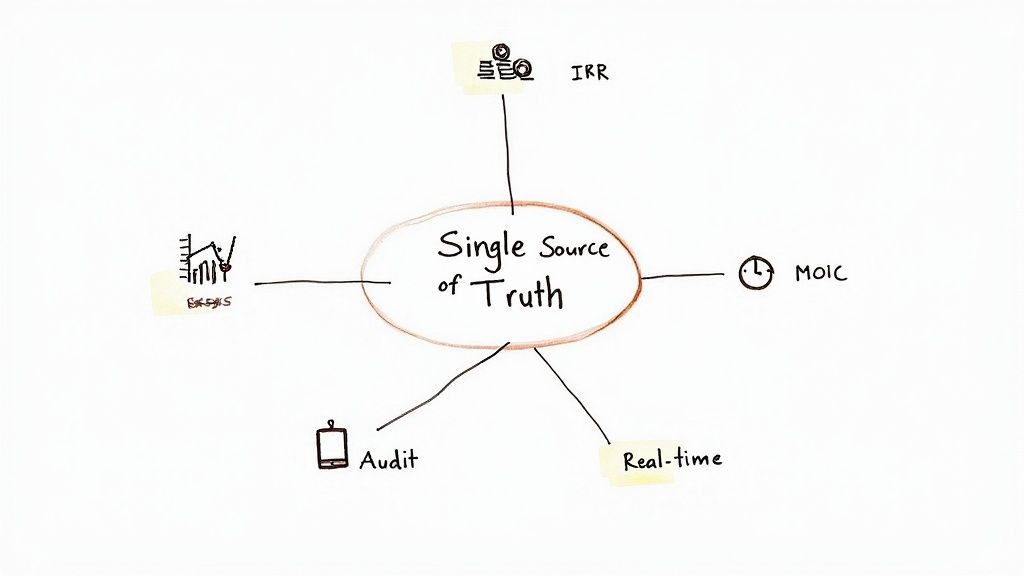
The bedrock of any good system is its ability to create a single source of truth (SSoT). Think about it: every financial statement, operating metric, cap table, and legal doc from every single portfolio company, all flowing into one central, secure place. No more wrestling with conflicting spreadsheet versions or digging through old email chains.
This unified hub means everyone—from the GP to the investor relations team—is looking at the same numbers. When a portco sends an update, it ripples through the entire system instantly. Every analysis and every report is then based on the freshest, most accurate data you have.
Automated Valuations and Performance Metrics
Manually calculating portfolio valuations and performance metrics is a nightmare of complexity and potential errors. Modern software takes this entire workflow off your plate, giving you consistent, auditable numbers every single time.
These platforms have powerful calculation engines that can:
- Support ASC 820 Compliance: The software gives you a structured way to handle fair value measurement, making your valuation process consistent and easy to defend during an audit.
- Calculate Real-Time Metrics: Instantly get your hands on the numbers that matter most, like Internal Rate of Return (IRR), Multiple on Invested Capital (MOIC), Distributions to Paid-in Capital (DPI), and Total Value to Paid-in Capital (TVPI).
- Handle Complex Structures: You can easily manage funds with multiple currencies, tiered waterfalls, and complicated SPV structures without building fragile, one-off formulas in Excel.
What used to be a multi-day scramble becomes a background task, delivering precise metrics whenever you need them.
Interactive Dashboards and Analytics
Static, PDF-based reports are a thing of the past. The best private equity portfolio monitoring software offers dynamic, interactive dashboards that turn your data into visual stories. GPs can slice and dice the entire portfolio by industry, geography, or fund, immediately spotting trends and red flags.
Imagine a GP sees a small dip in EBITDA margin across three companies in the same industry. With a few clicks on the dashboard, they drill down and uncover a shared supply chain problem. This allows them to step in weeks before the issue would have ever surfaced on a standard quarterly report. That's the power of turning data into foresight.
This capability changes portfolio oversight from a reactive, backward-looking exercise into a proactive, strategic one. You can ask deeper questions and get immediate answers without asking an analyst to build a new report from the ground up.
Streamlined and Compliant LP Reporting
Investor relations teams often feel the most pain during reporting season. The right software provides a massive relief with reporting tools built for both speed and compliance. Key features here include tracking unfunded commitments, capital calls, distributions, and quarterly valuations with ease. For many firms, modern AI-powered document ingestion and custodian feeds have completely changed the game, cutting the quarter-end close process from weeks down to just a few days.
An IR professional can use these tools to generate custom, ILPA-compliant LP reports in a matter of minutes. Instead of manually copying and pasting data, they can pull directly from the SSoT, use pre-built templates, and export professional-grade reports that build investor trust. This doesn't just save hundreds of hours each quarter; it drastically cuts the risk of an embarrassing mistake in your investor communications.
Seamless Integrations and Robust Security
Finally, a platform's true value comes from how well it plays with the other tools you use. Integrations with your accounting systems, CRMs, and data rooms ensure that information flows smoothly, which means less manual data entry and cleaner data across the entire firm.
Just as critical is security. Top-tier platforms are built with bank-grade security protocols. We're talking end-to-end encryption, regular third-party audits, and certifications like SOC 2 and ISO 27001. This is how you ensure that your firm's—and your portfolio companies'—most sensitive financial data is always protected, giving both you and your LPs total peace of mind.
Who Really Wins? The Impact on Your Team
Switching to a real portfolio monitoring platform isn't just about a firm-wide tech upgrade. It's about giving each person on your team the right tools to do their job better, faster, and with more impact.
For every key player, this software cuts through the administrative noise and replaces it with clarity. It gets them out of the business of hunting for data and into the business of using it.
For General Partners: A True Command Center for Your Portfolio
General Partners live and die by the quality of their information. You can't steer a multi-million or billion-dollar portfolio when you're flying blind, relying on a patchwork of outdated spreadsheets.
A dedicated platform acts as a GP's command center. It delivers a real-time, high-level view of the entire portfolio's health. With just a few clicks, you can dive into a specific company's performance, see how it stacks up against others in the same sector, or spot an outlier that needs immediate attention.
This kind of immediate access to trustworthy data changes the game for a GP’s decision-making:
- Smarter Capital Allocation: Instead of waiting for quarterly reports, you can see in real-time which companies are driving value and deserve that follow-on investment. You're making capital decisions based on today's performance, not last quarter's news.
- Proactive Value Creation: The right dashboard will flag an issue—like a dip in margins across a few portfolio companies—long before it snowballs into a crisis. This allows you to step in, ask the right questions, and help management course-correct.
- Sharper Strategic Planning: When you have a clear, holistic picture of performance, you can more accurately model future fund returns, anticipate liquidity events, and fine-tune your firm’s overarching investment thesis.
For CFOs: Bringing Sanity to Finance and Operations
The CFO and their finance team carry the immense weight of ensuring data integrity, navigating compliance, and managing risk. For them, private equity portfolio monitoring software isn't a luxury; it's a lifeline.
The platform pulls all financial data into one place, creating a single, auditable source of truth. The days of chasing down different spreadsheet versions are over. This instantly strengthens financial governance and gives you a rock-solid foundation for every valuation and report you produce.
A CFO’s best friend is a system that guards data integrity. It replaces the guesswork and painful manual reconciliation with automated, standardized workflows, turning the dreaded audit season into a far more manageable exercise.
In fact, the need to get a handle on risk and compliance is often what pushes firms to adopt these tools in the first place. Cloud-based platforms have been shown to cut down the intense manual data reconciliation workload by 30-40%. You can read more about these market trends and how they’re shaping portfolio management.
For Investor Relations: Building Trust Through Transparency
The relationship between your firm and your Limited Partners (LPs) is built on a foundation of trust. And in this business, trust is earned through clear, consistent, and transparent communication. Investor Relations teams are on the front lines, and clunky, manual reporting makes their jobs a nightmare.
Portfolio monitoring software completely changes this dynamic. Instead of spending weeks wrestling with spreadsheets to compile quarterly reports, your IR team can generate accurate, ILPA-compliant updates whenever they're needed. They can field a specific LP query in minutes, not days, by pulling customized data right from the platform.
This fundamentally elevates how IR teams can serve their investors:
- Deliver Timely Insights: Give LPs the detailed, current information they've come to expect, which reinforces your firm’s professionalism and commitment to transparency.
- Guarantee Consistency: Automation removes the risk of human error, so you know every LP gets the same accurate data, every single time.
- Deepen Relationships: When you can share insights quickly and proactively, you’re not just reporting—you’re building stronger relationships and positioning your firm as a top-tier manager.
How to Choose the Right Software Partner
Picking the right private equity portfolio monitoring software is less about buying a product and more like bringing on a key strategic partner. This isn't just another tool in your tech stack; it's the future backbone of your data operations. The platform you choose will shape everything from how you make capital allocation decisions to the level of trust you build with your investors.
Getting this decision right means seeing past a slick demo and focusing on the core capabilities that actually match your firm's specific needs and where you're headed in the long run.
The first move is always to look inward. Before you even think about scheduling a product tour, you need to get brutally honest about your firm’s biggest headaches. Are your teams burning weeks every quarter just to pull together reports? Is your data so fragmented across countless spreadsheets that a single, unified view of the portfolio feels like a fantasy? Or maybe your main struggle is accurately tracking complex fund structures and co-investments.
Nailing down these specific issues gives you a concrete scorecard to measure any potential solution against. It’s the difference between a vague goal like "we need to be more efficient" and a sharp objective like "we need a system that automates ILPA-compliant reporting and slashes our closing time by at least 50%."
Evaluating Vendor Capabilities Beyond the Sales Pitch
Once you’ve mapped out your internal requirements, the real evaluation can start. Just about every vendor will promise you a “single source of truth” and powerful analytics. Your job is to poke holes in those claims and validate them with sharp questions that get at the reality of implementation and day-to-day use.
A solid evaluation framework really boils down to three critical areas that will determine a platform's long-term value:
- Technical Fit and Scalability: How neatly does the software plug into your existing systems, like your accounting platform? More importantly, can it scale with you as your firm grows and your funds become more complex?
- Security and Compliance: Does the vendor meet the non-negotiable security standards needed to protect your (and your LPs') highly sensitive financial data?
- Partnership and Support: What happens after the ink is dry on the contract? Are you left on your own, or do you have a genuine support system?
Choosing a software partner is a long-term commitment. The right vendor acts as an extension of your team, providing not just technology but also the expertise and support needed to ensure you extract maximum value from your investment.
A Practical Vendor Evaluation Checklist
To keep your evaluation process grounded and consistent, use a structured checklist during demos and follow-up calls. This simple tool helps you cover all your bases and allows for a true apples-to-apples comparison between vendors. It’s the best way to avoid being dazzled by a cool feature that doesn't actually solve one of your core problems.
Here’s a practical checklist to help you systematically evaluate and compare potential software partners.
Vendor Evaluation Checklist
Asking these kinds of specific, operational questions forces vendors off their marketing script. It gives you a much clearer picture of what it will actually be like to work with their platform and their team day in and day out.
At the end of the day, the best private equity portfolio monitoring software isn't just the one with the longest feature list. It's the one that becomes a reliable, secure, and scalable foundation for your firm’s growth.
Ensuring a Smooth Implementation and Adoption
Picking the right private equity portfolio monitoring software is just the start. The real value comes from a smart, well-managed implementation. A thoughtful rollout can turn a daunting project into a strategic win, driving quick adoption from your team and a much faster return on your investment. This isn't about just flipping a switch; it's a careful process that depends on a solid partnership with your vendor and strong leadership within your own firm.
The work begins long before you go live. A successful rollout is built on a clear roadmap that breaks the transition into digestible phases, starting with the project kickoff. This first step is absolutely critical for getting your internal team and the vendor's experts on the same page about timelines, goals, and who owns what. You'll want to appoint an internal project champion right away to keep things moving and maintain momentum.
This process map gives you a high-level view of the journey, from figuring out what you need to choosing the right partner.
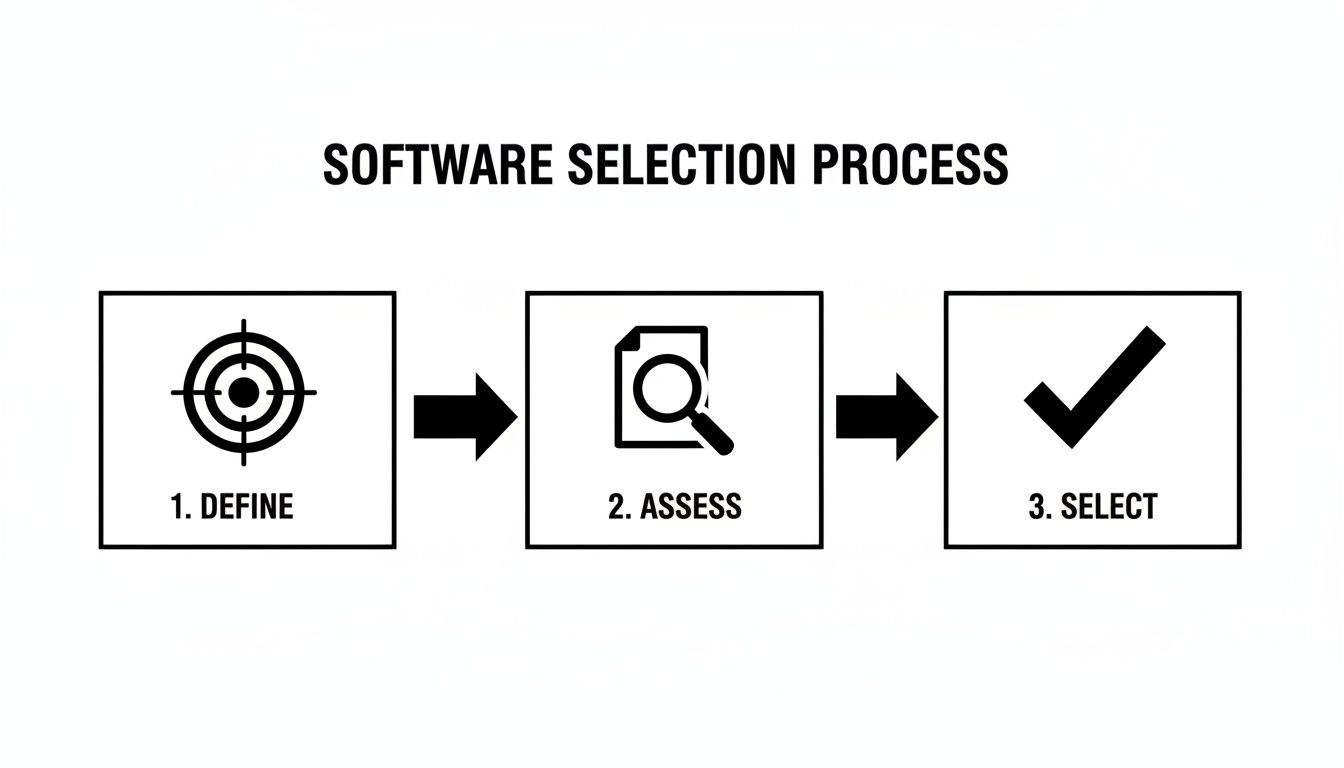
As you can see, a great implementation really starts with a methodical selection process. It ensures the software you choose is aligned with your firm’s specific goals from day one.
Navigating Data Migration and Training
Let’s be honest: the toughest part is often the data migration. This is where you pull, clean, and organize historical data from what feels like a million different spreadsheets and old systems. Underestimating this step is one of the most common mistakes firms make. The key is to get ahead of it by identifying all your data sources early and collaborating with your vendor to map everything correctly into the new platform. This is how you truly build that "single source of truth" everyone is after.
A smooth data migration isn't just a technical exercise; it's about building trust in your new system. When your team sees their historical data perfectly reflected from day one, their confidence in the platform skyrockets, and adoption happens naturally.
Once your data is in, the spotlight turns to your people. Good user training is so much more than pointing out which buttons to press. It needs to be tailored to specific roles, showing how the software solves the day-to-day problems faced by your finance, investment, and IR teams.
To make the transition as painless as possible, many firms lean on vendors who offer dedicated support. For those who need more hands-on help, exploring a provider's professional services can be a game-changer, especially when tackling the complexities of data migration and user onboarding.
Finally, the "go-live" moment shouldn't be an abrupt shock to the system. Think of it as a carefully managed transition. For a smooth launch, follow these best practices:
- Run Parallel Systems: For a short period, keep your old and new systems running side-by-side. This helps validate the new data and gives your team peace of mind.
- Phased Rollout: Start with a small group of power users first. Let them kick the tires before you open it up to the entire firm.
- Post-Launch Support: Make sure your vendor has dedicated support ready for the first few weeks to quickly tackle any hiccups and answer questions as they come up.
Frequently Asked Questions
When firms start exploring portfolio monitoring software, a few key questions always come up. Here are the straight-up answers to the most common ones we hear.
How Long Does Implementation Actually Take?
This is the classic "it depends" question, but I can give you some real-world benchmarks. For most modern, cloud-based platforms, you're realistically looking at an implementation time of about 2-8 weeks.
The biggest variable here isn't the software—it's your data. If your historical portfolio data is clean, consistent, and easy to access, you'll be on the faster end of that range. If you're dealing with a decade of disconnected spreadsheets or a highly customized legacy system, expect it to take a few months to get everything migrated and mapped correctly.
Can This Kind of Software Handle Our Complex Fund Structures?
Yes, absolutely. In fact, this is one of the main reasons firms ditch spreadsheets in the first place. Trying to manually track complex structures is where Excel breaks down and serious errors creep in.
A dedicated private equity portfolio monitoring software is specifically built to manage the tricky stuff: multi-level fund structures, special purpose vehicles (SPVs), and co-investment vehicles are all standard fare. They're also designed to handle multi-currency valuations and reporting automatically, which is a lifesaver for any GP with international assets.
This isn't just a convenience; it's about removing a massive source of manual work and operational risk from your process.
Just How Secure Is Our Financial Data in the Cloud?
This is a critical question, and any vendor worth their salt will take it very seriously. Security isn't just a feature; it's the foundation. Reputable platforms use multiple layers of defense to protect your firm’s most sensitive information.
When you're vetting a platform, make sure you see evidence of these key security measures:
- End-to-end data encryption, which protects your data both when it's being sent (in transit) and when it's stored (at rest).
- Regular third-party security audits and penetration testing to proactively find and fix vulnerabilities.
- Compliance with global standards like SOC 2 and ISO 27001, which are independent verifications of their security controls.
Don't just take their word for it. Always ask for their security documentation during your evaluation to ensure their protocols meet your firm's—and your LPs'—expectations.
Ready to turn your portfolio data from a liability into your most valuable asset? With Vestberry, you can finally replace those scattered spreadsheets with a single source of truth, automate your LP reporting, and give your team the actionable insights they need. Learn more about how we help firms make smarter, data-backed decisions.